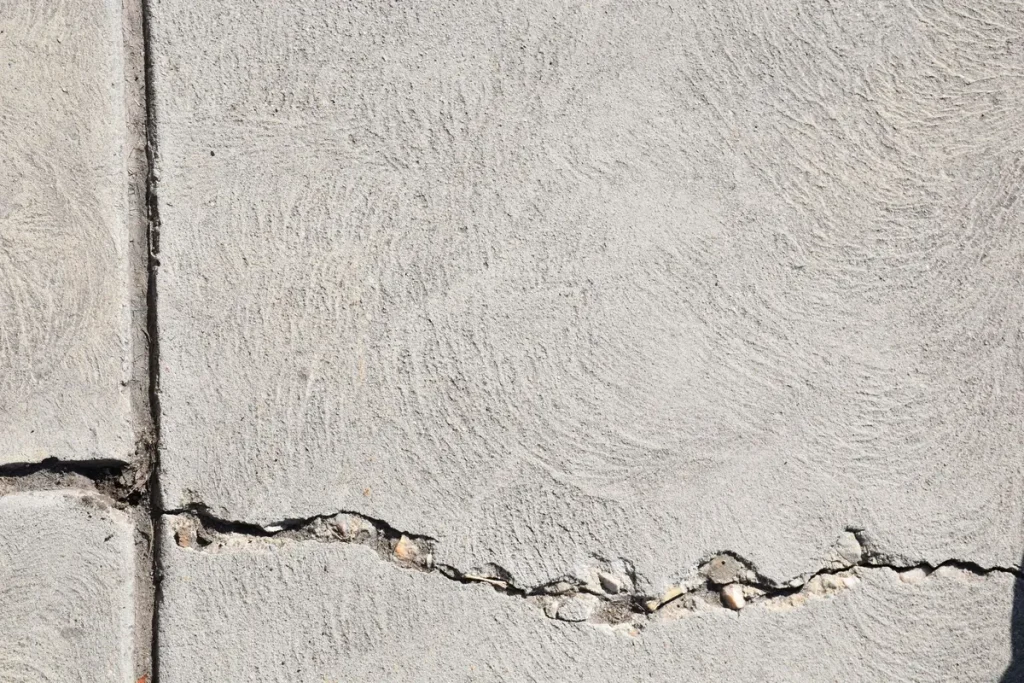
Almost every concrete or block foundation in Columbia cracks at some point. Concrete shrinks as it cures, soil moves with the seasons, and houses settle a little in their first years. Most cracks are small and harmless. A few are the early sign of a problem that gets more expensive the longer it waits. The difference is usually in the shape, the width and whether the crack is still moving.
Start with the shape
The pattern of a crack tells you a lot about the force that made it. Look at the crack, then compare it with these common shapes.
- Vertical hairline cracks in poured concrete are very common. They usually form as the concrete cures and shrinks, and they are often cosmetic. A thin vertical crack that has not changed over time is generally not a structural concern on its own.
- Horizontal cracks across a wall are more serious. They often mean soil pressure is pushing on the wall from outside. Basement walls that crack horizontally at mid-height may be bowing inward, and that needs a closer look.
- Stair-step cracks in block or brick follow the mortar joints. They usually mean the wall has shifted or settled unevenly. A stair-step pattern that is wider at one end than the other is a sign that one part of the foundation is moving more than the rest.
- Diagonal cracks at the corners of windows and doors often point to differential settlement, where one part of the house sinks more than another.
- Cracks in a slab that run toward a wall or a corner can mean the soil under the slab is moving. Random hairline cracks in a slab are usually shrinkage cracks.
Measure the width
A crack’s width matters as much as its shape. Hairline cracks, roughly the width of a fingernail, are usually watched rather than repaired right away. Cracks wider than about a quarter inch deserve a closer look, and any crack that is growing or lets in water needs attention. A simple habit helps: draw a pencil line at each end of the crack, mark the date and check it again in a few months. If the crack has grown, the foundation is still moving.
Check whether it is still moving
Many older cracks are stable and harmless. Others keep moving, especially in the seasons when clay soil shrinks in dry summers and swells after heavy rain. You can check for movement by taping a small piece of paper across the crack and watching whether it tears over time, or by measuring the crack width at the same spot every few weeks. A crack that changes should be inspected.
Look at the rest of the house
A crack rarely tells the full story on its own. Walk through the house and look for other signs that the foundation is moving:
- Doors or windows that stick, rub or no longer close square.
- Gaps between the walls and the ceiling, or between trim and the floor.
- Floors that feel uneven, bouncy or slope toward one wall.
- Water stains, damp patches or a white powder on basement walls.
When two or more of these show up with a crack, the foundation deserves a professional look. A single crack with no other signs is often worth monitoring rather than repairing.
Why drainage matters
Water is the most common reason a crack gets worse. Columbia’s clay soil holds water after rain and shrinks as it dries. Downspouts that dump water right next to the house, grading that slopes toward the foundation and gutters that overflow all keep the soil around the house wet, then dry, then wet again. That cycle pushes on the walls and opens cracks over time. Fixing the water flow is often part of the repair, even when the crack itself looks small.
Common repair options
The right repair depends on the crack and the cause. Some options are used for different situations:
- Injection fills a crack with an epoxy or polyurethane material to seal it and stop water. It works well for stable cracks in poured concrete.
- Steel stitching uses steel fasteners across a crack, usually in block walls, to hold the two sides together.
- Structural repair such as wall anchors, carbon fiber straps or piers is used when the wall or footing is still moving or has already shifted.
Sealing a crack that is still moving will not stop the movement, and the crack will often reappear. That is why we measure the crack and check the wall before recommending a repair.
When to call for an inspection
Call for an inspection if a crack is wider than about a quarter inch, if it has changed since you first noticed it, if it has a stair-step or horizontal shape, or if water is coming through it. Also call if you see cracks along with sticking doors, sloping floors or gaps around windows. An inspection gives you a written summary of what was found, the likely cause and the repair options, so you can decide what to do next.
Our team inspects foundation cracks across Columbia and the surrounding communities. See our foundation crack repair service for the methods we use, or book a foundation inspection to have the cracks measured and explained.
Questions before you book? Contact the foundation repair in Columbia, MO team and we will help you decide what the crack needs.